
The Breath of Champions: Why Respiratory Function Matters for Rodeo Speed Horses - Part 3
Posted by FLAIR Strips on Mar 13th 2026
The Breath of Champions: Why Respiratory Function Matters for Rodeo Speed Horses – Part 3
Barrel racing, roping, and other rodeo speed events demand explosive power, speed, and rapid recovery from the equine athlete. Riders often focus on conditioning muscles, improving stride mechanics, and strengthening the cardiovascular system. But one critical factor often receives less attention: respiratory function.
For many performance horses, the lungs become the true limiting factor. While selective breeding and training have dramatically improved heart and muscle performance, the lungs have not evolved at the same pace. As a result, the respiratory system can become the bottleneck in delivering oxygen to working muscles.
In speed events where fractions of a second matter, efficient breathing can influence stamina, recovery, and overall performance.
Why Breathing Can Limit a Barrel or Rodeo Horse’s Performance
Unlike muscles and the heart, the lungs do not significantly adapt or strengthen with training. This means a horse’s maximum breathing capacity is largely fixed.
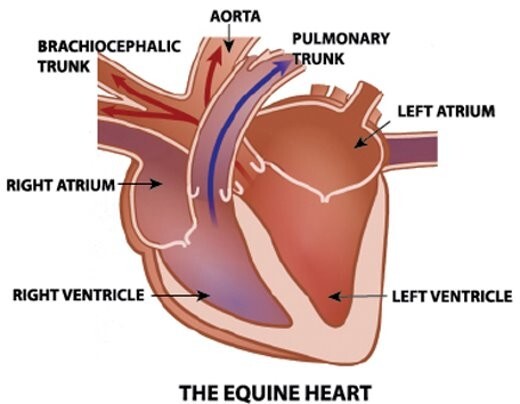
The equine heart is a powerful organ that strengthens and adapts with training. The lungs do not.
Research into equine exercise physiology shows several key limitations:
- Lung and chest size do not increase with conditioning
- Maximal breath volume remains unchanged regardless of fitness level
- The surface area responsible for oxygen exchange does not expand
- At the canter and gallop, breathing is synchronized with the stride — one breath per stride
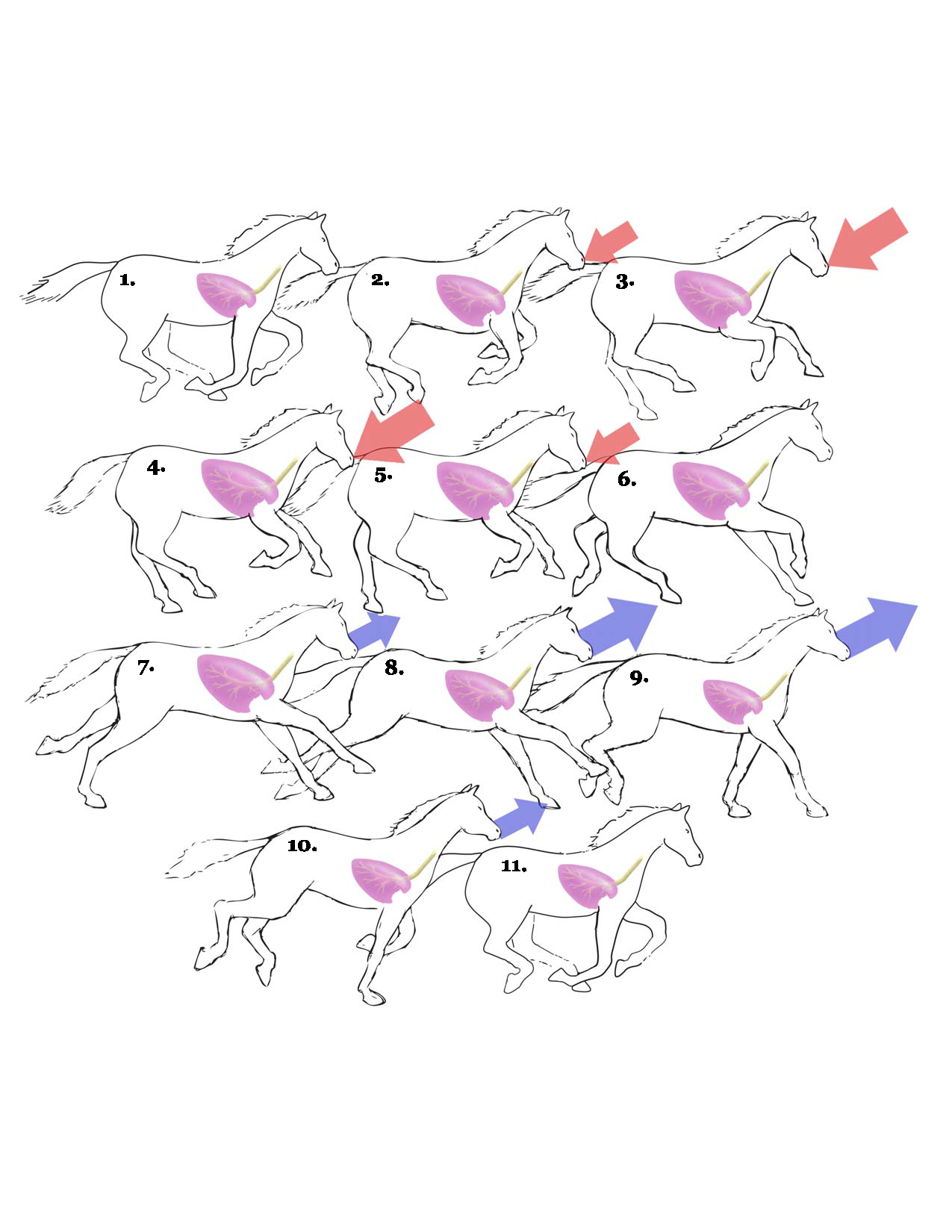
At a gallop, horses’ breathing and stride are linked 1:1 — one breath for each stride. The illustration shows air movement into and out of the lungs through one stride. Anything that impacts stride impacts breathing; anything that impacts breathing impacts stride.
This stride-breathing synchronization limits a horse’s ability to adjust breathing rate during intense exercise. For speed horses accelerating out of a turn or driving toward the timer, even small increases in airway resistance can increase the work of breathing, diverting energy away from muscles.
When oxygen supply struggles to keep up with demand, performance can suffer.
Training Around Respiratory Limitations in Speed Horses
Because the lungs cannot be conditioned the way muscles and the heart can, smart training programs focus on improving systems that can adapt.
A well-designed conditioning program improves how efficiently a horse delivers, uses, and recovers oxygen during competition.
1. Building Cardiovascular Fitness
A strong cardiovascular system helps maximize the oxygen available to working muscles.
Endurance conditioning can lead to:
- Lower heart rates during intense work
- Increased blood volume and oxygen-carrying capacity
- Improved circulation and waste removal
- Faster recovery between runs
For barrel horses and rope horses competing multiple times during a rodeo weekend, recovery efficiency is critical.
2. Improving Muscle Efficiency
Conditioned muscles become better at extracting and utilizing oxygen.
Adaptations include:
- Greater capillary density within muscles
- Increased mitochondria for efficient energy production
- Improved oxidative metabolism
- Reduced lactic acid buildup and delayed fatigue
This allows speed horses to maintain power through the entire pattern or run.
3. Sprint Conditioning for Explosive Power
Speed events rely heavily on fast-twitch muscle fibers for quick bursts of acceleration.
Sprint training helps:
- Improve anaerobic power
- Increase lactic acid buffering capacity
- Delay muscle fatigue during high-intensity efforts
Short interval gallops and controlled sprint work can improve performance during the most demanding parts of a run.
Designing a Conditioning Program for Rodeo Speed Horses
An effective program balances speed, endurance, strength, and recovery.

Key components include:
Endurance Work
Long trotting and slow-distance rides help develop an aerobic base and stamina.
Strength Training
Hill work, rollbacks, and tight circles strengthen the hindquarters and improve balance and agility.
Sprint Conditioning
Interval gallops and short bursts train fast-twitch muscle fibers responsible for acceleration.
Technical Drills
Transitions, collection work, and body-control exercises improve responsiveness and efficiency during competition patterns.
Recovery Management
Proper cool-downs, rest days, and active recovery allow muscles to repair and maintain peak performance.
Supporting Respiratory Health in Performance Horses
Because breathing capacity is limited, protecting airway health becomes essential for rodeo horses.
Veterinary monitoring can help detect respiratory challenges early.
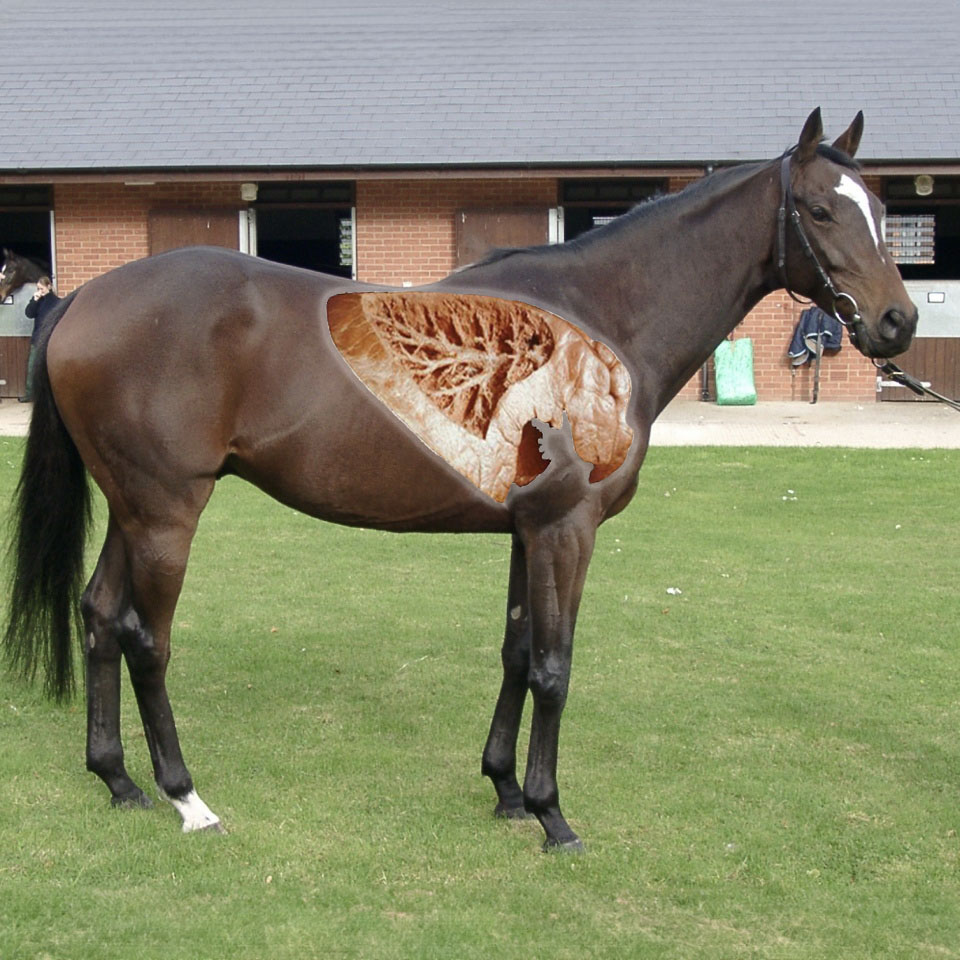
Horses’ lungs and chest size do not increase with conditioning. Maximal breath volume remains unchanged regardless of fitness level.
Common diagnostic tools include:
- Dynamic endoscopy during exercise
- Video endoscopy evaluations
- Bronchoalveolar lavage (BAL)
Environmental management also plays an important role. Reducing dust exposure, ensuring proper equipment fit, and maintaining clean air in stalls or trailers can help protect airway health.
FLAIR® Equine Nasal Strips are designed to support the nasal passages and reduce nasal airway collapse during intense exercise. By decreasing airway resistance, the Strips reduce the work of breathing during competition and training.
Breath of a Champion: Why Respiratory Efficiency Matters
Speed horses are incredible athletes capable of producing explosive power in a matter of seconds. But their respiratory system operates with very little margin for error.
Conditions such as exercise-induced pulmonary hemorrhage (EIPH), equine asthma (EA), and upper airway obstruction (UAO) can all impact breathing efficiency and performance.
Because the lungs have limited ability to adapt, maintaining respiratory health requires a comprehensive approach that includes:
- Strategic conditioning
- Veterinary monitoring
- Environmental management
- Proper equipment fit
- Support for nasal airway function
When riders understand the respiratory demands placed on speed horses, they can train smarter and help their horses perform at their best.
In rodeo competition, every breath counts.